
Understanding what nootropics are and how they affect brain chemistry is a question more people are asking in 2026, as the cognitive supplement market continues to grow rapidly. This article breaks down the science honestly, separates biology from marketing, and clarifies what the current evidence actually supports.
Key Takeaways
|
Question |
Answer |
|---|---|
|
What are nootropics? |
Nootropics are substances, including supplements, drugs, and foods, that are proposed to support cognitive functions such as memory, focus, or mental clarity. |
|
Do nootropics actually affect brain chemistry? |
Some do interact with neurotransmitter systems, but most supplements have indirect, modest, or inconsistent effects in healthy humans. |
|
Which nootropics have the most human evidence? |
Caffeine and creatine have the strongest human evidence. Bacopa monnieri has limited human evidence. Most others remain at early or preclinical stages. |
|
Are the cognitive effects large? |
Where effects exist, they are typically small to moderate and not universal. Results vary significantly between individuals. |
|
Is the nootropics market regulated? |
Supplement regulation is generally weaker than pharmaceutical regulation. Many products on the market are under-dosed or make claims that exceed their evidence base. |
|
What should I look for in a supplement? |
Transparent labeling, clinically referenced doses, bioavailable ingredient forms, and third-party testing are the most meaningful quality markers. |
|
Are nootropics safe? |
Most dietary nootropics have reasonable safety profiles at standard doses, but long-term safety data for many compounds in healthy humans remains limited. |
What Are Nootropics? Defining the Term Accurately
The word "nootropic" was coined in 1972 by Romanian chemist Corneliu Giurgea. His original criteria were strict: a substance had to enhance learning and memory, protect the brain from injury, improve neuronal firing under adverse conditions, and have very low toxicity.
Today, the term is used far more loosely. Marketers apply it to anything from caffeine tablets to exotic herbal extracts. That looseness is the first problem you should understand before spending any money.
Broadly, nootropics now fall into three categories:
-
Pharmaceutical compounds: Such as modafinil or racetams. These are prescription-only in most countries and outside the scope of dietary supplements.
-
Dietary supplements: Including herbal extracts, amino acids, vitamins, and minerals. These are what most consumer products contain.
-
Foods and lifestyle factors: Caffeine, omega-3 fatty acids, and sleep are the most evidence-backed "cognitive supports" available, yet rarely discussed in supplement marketing.
The gap between these categories is enormous. A pharmaceutical compound studied in clinical trials is a different entity from an herbal extract tested in a small study on rats. Conflating the two is how the industry deceives consumers.
How Nootropics Are Proposed to Affect Brain Chemistry
To understand what nootropics are and how they affect brain chemistry, you need a basic map of the biological systems they target. These systems are real. The question is whether the supplements sold to you actually reach them in meaningful ways.
Neurotransmitter Systems
Neurotransmitters are chemical messengers that neurons use to communicate. The ones most often cited in nootropic marketing are:
-
Acetylcholine: Involved in learning and memory formation. Choline precursors like alpha-GPC are biologically plausible supporters of acetylcholine synthesis, but evidence of meaningful cognitive benefit in healthy humans is limited.
-
Dopamine: Involved in motivation, reward, and focus. L-tyrosine is a dopamine precursor with some limited human evidence for maintaining performance under stress, but effects in non-stressed, healthy individuals are not well established.
-
Serotonin: Involved in mood regulation. 5-HTP influences serotonin production, but its effects on cognition specifically are not well established in human trials.
-
GABA: The primary inhibitory neurotransmitter. Directly consumed GABA has poor blood-brain barrier penetration, meaning most oral GABA supplements have biologically plausible but unconfirmed effects on the brain.
Neurotransmitter systems are real biological structures. Most dietary supplements, however, have indirect, modest, or inconsistent effects on them in healthy humans. That is a critical distinction the industry rarely makes.
Neurotrophic Factors: BDNF and NGF
Brain-derived neurotrophic factor (BDNF) and nerve growth factor (NGF) are proteins that support neuron survival, growth, and plasticity. They are genuinely important for long-term brain health.
Some compounds, notably lion's mane mushroom extract, show early or preclinical evidence of influencing NGF. However, most of this research is conducted in cell cultures or animal models. Translating those findings to meaningful human cognitive outcomes is not yet well established.
Exercise, by contrast, has strong human evidence for raising BDNF. It is free. That context matters.
Cerebral Blood Flow and Energy Metabolism
The brain consumes roughly 20% of the body's total energy despite representing only about 2% of body weight. Some nootropic compounds target cerebral blood flow or mitochondrial function:
-
Ginkgo biloba: Has limited human evidence for modest effects on cerebral blood flow, primarily studied in older populations with cognitive decline.
-
Creatine: Has strong human evidence for supporting phosphocreatine regeneration in brain tissue, with some limited human evidence for modest improvements in short-term memory and reasoning tasks, particularly under sleep deprivation or in vegetarians who have lower baseline creatine levels.
-
Coenzyme Q10 (CoQ10): Biologically plausible role in mitochondrial energy production, but human evidence for cognitive effects in healthy individuals is limited.
Standardizing the Evidence: What the Research Actually Shows
One of the biggest problems in the nootropics space is inconsistent language. "Studies show" can mean anything from a single mouse study to a large randomized controlled trial. Below is an honest categorization using consistent evidence standards.
Strong Human Evidence
-
Caffeine: The most robustly studied cognitive compound in the world. Consistent human evidence for short-term improvements in alertness, reaction time, and attention. Effects are dose-dependent and tolerance develops with regular use.
-
Creatine: Strong human evidence for physical performance. Limited to moderate human evidence for cognitive support, particularly in sleep-deprived individuals or vegetarians.
Limited Human Evidence
-
Bacopa monnieri: Multiple randomized controlled trials suggest modest improvements in memory recall after 8 to 12 weeks of consistent use. Effects are typically small to moderate and not universal. Gastrointestinal side effects are common at standard doses.
-
Omega-3 fatty acids (EPA/DHA): Limited human evidence for supporting cognitive health over the long term, with stronger evidence in populations with low baseline omega-3 intake or cognitive decline.
-
Magnesium (in specific forms): Limited human evidence suggests magnesium threonate may cross the blood-brain barrier more effectively than other forms. Cognitive effects in healthy, non-deficient individuals are not well established.
-
L-theanine (combined with caffeine): Limited human evidence for modest improvements in attention and reduced jitteriness when paired with caffeine. Effects appear primarily synergistic with caffeine rather than independent.
Early or Preclinical Evidence
-
Lion's mane mushroom: Preclinical evidence for NGF stimulation. A small number of human studies exist with modest positive signals, but sample sizes are very small and replication is lacking.
-
Ashwagandha: Early human evidence for stress and cortisol reduction. Cognitive effects are biologically plausible given the link between chronic stress and cognitive impairment, but direct cognitive benefits in healthy humans are not well established.
-
Phosphatidylserine: Early or preclinical evidence, with some limited older human studies in populations with age-related cognitive decline. Evidence in healthy young adults is thin.
-
Shilajit: Early evidence for supporting mitochondrial function and energy. Human data specifically for cognitive outcomes is very limited.
This infographic summarizes five key points about nootropics and how they affect brain chemistry, highlighting neurotransmitter systems and cognitive effects.
The Evidence Quality Problem: What You Need to Know Before Buying
Many nootropic products are built on research that does not actually support the claims on the label. This is not a minor issue. It is the central problem with the category.
The common patterns that undermine the evidence base include:
-
Small sample sizes: Studies with 10 to 30 participants cannot establish reliable conclusions about effects in the general population.
-
Weak replication: A single positive study that has never been independently replicated is not a foundation for a product claim.
-
Placebo effects: Cognitive self-assessment is highly susceptible to placebo response. Many nootropic trials that rely on subjective outcome measures show significant placebo arms.
-
Healthy user bias: Studies often use populations with baseline deficiencies or cognitive decline. Extrapolating those results to healthy, well-nourished adults is biologically questionable.
-
Under-dosing in products: Even where evidence exists for a compound at a specific dose, many products contain doses far below what was studied. This is how ingredients end up on labels without delivering studied effects.
These are not separate problems. They compound each other. A small study with a placebo issue and a product that under-doses the ingredient creates a chain of failures that ends with you spending money on something that most likely passes through your body without measurable effect.
Bioavailability: Why the Form of an Ingredient Matters
Even biologically active compounds can fail to reach their target tissue if they are poorly absorbed. This is where the term bioavailable becomes genuinely important rather than a marketing word.
Magnesium is a clear example. Magnesium oxide, one of the cheapest forms, has approximately 4% absorption. It is widely used because it is inexpensive, not because it is effective. Magnesium glycinate, malate, and threonate have meaningfully higher absorption rates and are the forms supported by better evidence for physiological effects.
The same principle applies across many supplement categories:
-
Curcumin (from turmeric) has very poor standalone bioavailability. Formulations with piperine or phospholipid complexes show better absorption profiles.
-
Coenzyme Q10 in ubiquinol form is more bioavailable than ubiquinone for older individuals.
-
Omega-3 in triglyceride form is generally better absorbed than ethyl ester form.
The ingredient form printed on the label tells you more about a product's quality than the ingredient name alone. Most labels do not make this distinction clear. That is deliberate.
Proprietary Blends: The Transparency Problem
A proprietary blend is a collection of ingredients listed under a single combined weight, with no individual doses disclosed. This is not transparency. It is obscuring weak formulas behind marketing language.
When individual ingredient doses are hidden, there is no way to verify whether any component reaches a dose that has been studied for efficacy. The blend may contain a token amount of an expensive, well-evidenced ingredient while the bulk of the weight comes from something cheap and inert.
Any nootropic product that uses a proprietary blend without full label disclosure should be treated with significant skepticism. The standard for quality is full ingredient disclosure with doses that reference the clinical literature.
Products That Are Relevant to Cognitive Support: A Separate Look
The following products from Stranvia's lineup contain ingredients that appear in the nootropics and cognitive support literature. Scientific claims have been separated from product descriptions to maintain clarity.
LøveRicht Kreatin Monohydrat (Creatine Monohydrate)
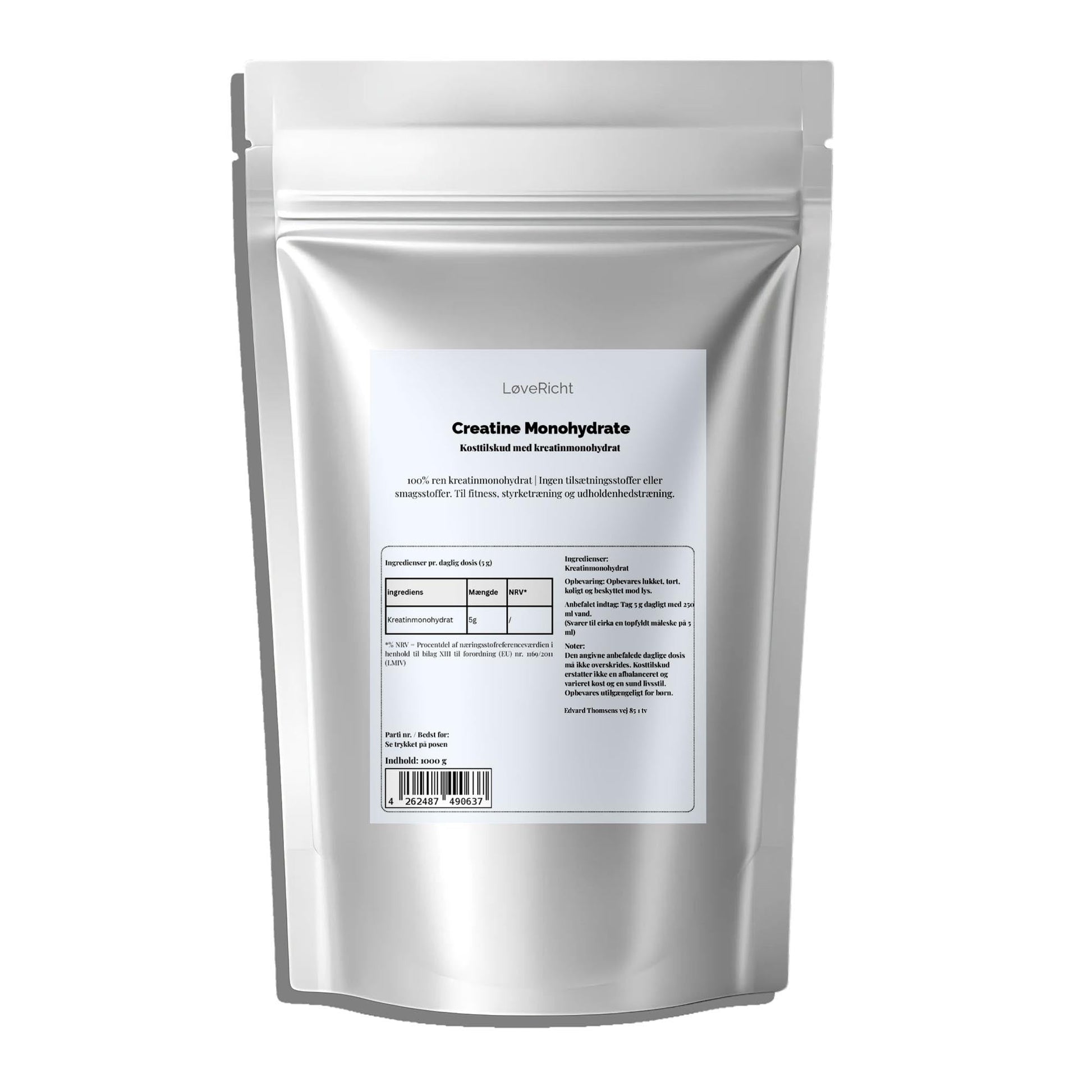
Creatine monohydrate is a well-studied compound in both sports and cognitive research. Human studies show potential cognitive effects under conditions such as sleep deprivation, mental fatigue, or low dietary creatine intake. Effects in healthy, well-rested individuals are generally modest and situation-dependent.
LøveRicht Kreatin Monohydrat is a 1000g format with no fillers, priced at around kr219. At 5g per serving, that is 200 servings. The dose matches what has been used in the relevant research.
LøveRicht Magnesium Complex

Magnesium is an essential mineral involved in neuronal signaling and normal nervous system function. Deficiency in magnesium intake can negatively affect general physiological and cognitive performance. Evidence for additional cognitive enhancement in non-deficient individuals is limited.
LøveRicht Magnesium Complex uses four magnesium forms in a single vegan tablet, priced at around kr125 for 60 tablets. Using multiple forms is relevant because different forms have different absorption profiles and tissue targets.
LøveRicht Omega-3 Max 35/25
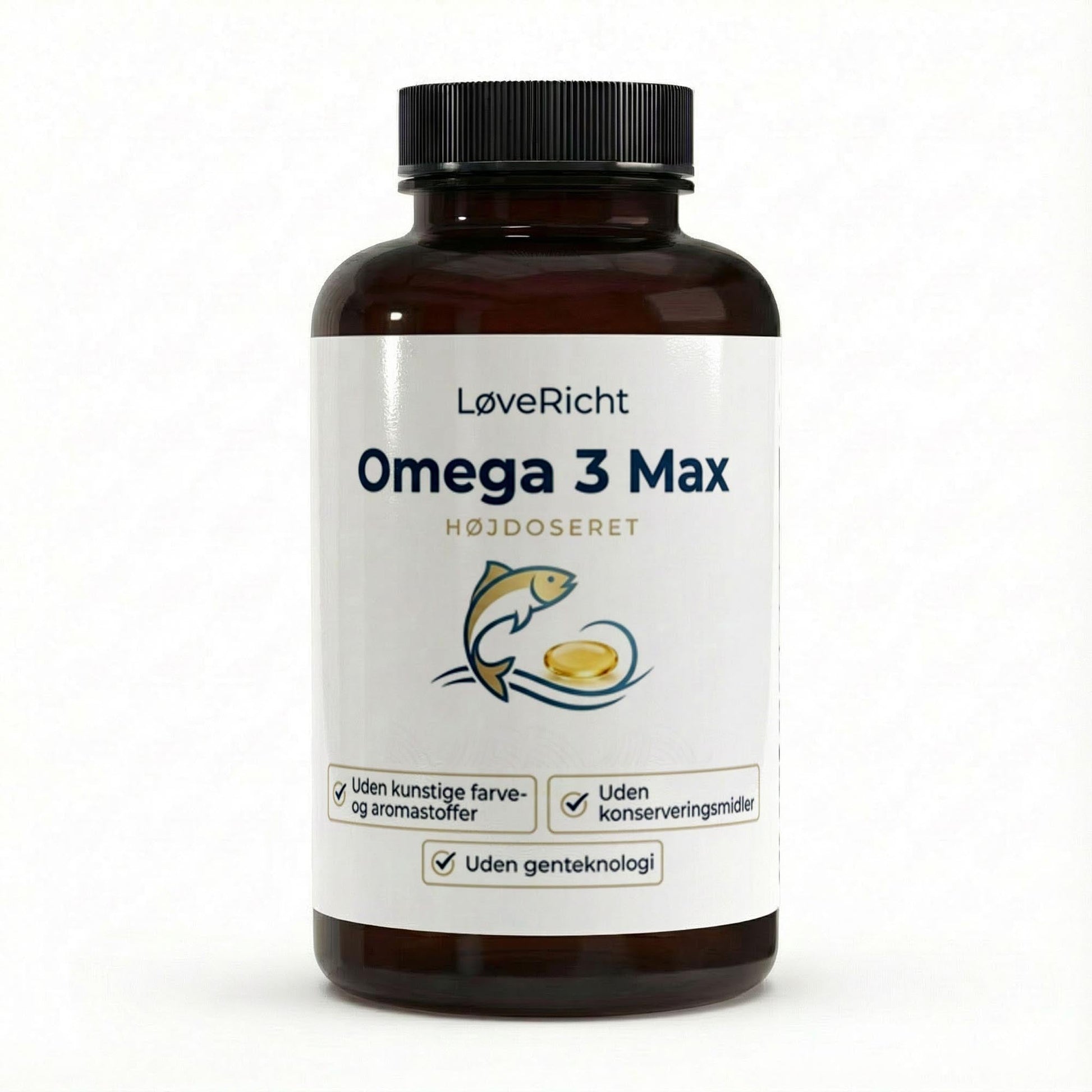
Omega-3 fatty acids, particularly EPA and DHA, are structural components of neuronal cell membranes. Human evidence suggests potential cognitive relevance, especially in populations with low dietary intake. Effects in individuals with adequate baseline intake are less consistent.
LøveRicht Omega-3 Max discloses 700mg EPA and 500mg DHA per daily dose. That level of label transparency is unusual in this category. Priced at around kr225 for 120 softgels.
LøveRicht Shilajit

Shilajit is a mineral-rich natural substance containing fulvic acid and trace minerals. Preclinical research suggests potential mitochondrial and cellular energy-related mechanisms. Human evidence for cognitive outcomes is currently limited.
LøveRicht Shilajit contains 600mg standardized extract with fulvic acids, priced at around kr199 for 90 vegan capsules. Two capsules per day.
What the Nootropics Industry Gets Wrong About Brain Chemistry
Marketing in this space consistently implies direct, significant, and rapid changes to brain chemistry from supplement use. This framing is misleading.
Neurotransmitter levels are tightly regulated. Consuming a precursor to dopamine does not automatically increase dopamine in a meaningful way in a healthy brain. Feedback mechanisms compensate. The brain is not a simple input-output machine.
BDNF and NGF are real growth factors with genuine importance. The claim that a supplement "boosts BDNF" often rests on animal data that has not been replicated in human trials at doses used in supplements.
The honest position is this: brain chemistry is real, the pathways these compounds target are real, and some compounds have measurable effects at the right doses in the right populations. But the effects are typically small to moderate, not universal, and rarely replicated consistently across diverse human populations.
That does not make the entire category worthless. It means you should approach it with calibrated expectations and not based on marketing copy.
What to Actually Look For When Choosing a Nootropic Supplement
Given everything above, here is a practical framework for evaluating any product that claims cognitive support:
-
Full label disclosure: Every ingredient and its individual dose must be listed. No proprietary blends.
-
Doses referenced to clinical literature: The dose in the product should match or reasonably approach doses used in peer-reviewed studies.
-
Bioavailable ingredient forms: Check that the specific form of each ingredient is the one with evidence for absorption and efficacy.
-
Third-party testing: Independent laboratory verification of contents and purity.
-
Honest evidence categorization: A reputable company should not claim strong human evidence for compounds that are only at early or preclinical stages.
Products that meet all five criteria are rare. Most fail at the first two.
Conclusion: What Are Nootropics and How Do They Affect Brain Chemistry?
Nootropics are substances proposed to support cognitive functions by interacting with neurotransmitter systems, energy metabolism, or neuronal growth pathways. Understanding what nootropics are and how they affect brain chemistry requires honest engagement with the evidence, not marketing claims.
The honest summary is this: a small number of compounds including caffeine, creatine, and Bacopa monnieri have meaningful human evidence for modest cognitive effects in specific populations. Most other supplements in this category remain at early or preclinical stages of research. Effects where they exist are typically small to moderate and not universal.
The brain chemistry mechanisms targeted by nootropics are real biological systems. Whether the products sold to you actually reach those systems in effective amounts is a separate question, and usually the one the industry avoids answering directly.
Prioritize transparency, clinically referenced doses, bioavailable forms, and third-party verification. Skip anything hiding behind a proprietary blend. And maintain calibrated expectations: no supplement replaces consistent sleep, exercise, and nutritional adequacy as the best-evidenced supports for cognitive health.
You can explore the full Stranvia supplement range or review available bundles if you want to compare what is available against the framework above.
Frequently Asked Questions
What exactly are nootropics and how do they affect brain chemistry in simple terms?
Nootropics are substances proposed to support cognitive functions like memory, attention, or focus by interacting with neurotransmitter systems, brain energy metabolism, or neuronal growth factors. The interaction is real at a biological level, but for most dietary supplements the effects in healthy humans are indirect, modest, and not well established compared to what marketing suggests.
Is there strong scientific evidence that nootropics work?
It depends heavily on the specific compound. Caffeine and creatine have strong human evidence for cognitive-relevant effects. Bacopa monnieri has limited human evidence for modest memory benefits. Most other nootropic supplements are at early or preclinical stages of research. No single supplement has strong human evidence for dramatic cognitive enhancement in healthy adults.
Which nootropics are worth trying in 2026?
Based on current evidence, caffeine (with or without L-theanine), creatine monohydrate, and Bacopa monnieri have the most credible human evidence and reasonable safety profiles. Omega-3 fatty acids (EPA/DHA) and magnesium in bioavailable forms also have biologically plausible cognitive support roles, particularly if dietary intake of these nutrients is low.
Do nootropics actually increase neurotransmitters like dopamine and serotonin?
Some nootropic compounds can influence neurotransmitter precursor availability, but the brain tightly regulates neurotransmitter levels through feedback mechanisms. Simply consuming a precursor does not automatically and directly raise active neurotransmitter levels in meaningful ways in a healthy brain. Effects are indirect and typically modest.
What is the difference between nootropics with strong vs. limited vs. preclinical evidence?
Strong human evidence means multiple replicated randomized controlled trials in humans confirm an effect. Limited human evidence means some human trials exist but they are small, inconsistent, or not well replicated. Early or preclinical evidence means the research is primarily from cell studies or animal models, with little or no robust human trial data to draw from.
Are nootropic supplements safe to take daily?
Most commonly used dietary nootropics have reasonable short-term safety profiles at standard doses. However, long-term safety data for many compounds in healthy humans is limited. Interactions with medications are possible for several herbal nootropics including Bacopa and Ginkgo. Consulting a healthcare provider before regular use is advisable, particularly for individuals with existing health conditions.
How do I know if a nootropic supplement is actually dosed correctly?
Compare each ingredient's dose on the label against doses used in peer-reviewed human studies for that specific compound. A product hiding ingredient amounts inside a proprietary blend cannot be evaluated this way, which is precisely why proprietary blends are a significant red flag. Full label transparency with individual ingredient doses is the minimum standard for a credible product.